

By EAMN Editorial Desk
A recent meeting between President Bola Ahmed Tinubu and leaders of the Catholic Bishops’ Conference of Nigeria has sparked an important national debate: does the government’s description of Nigeria reflect the daily experience of its citizens?
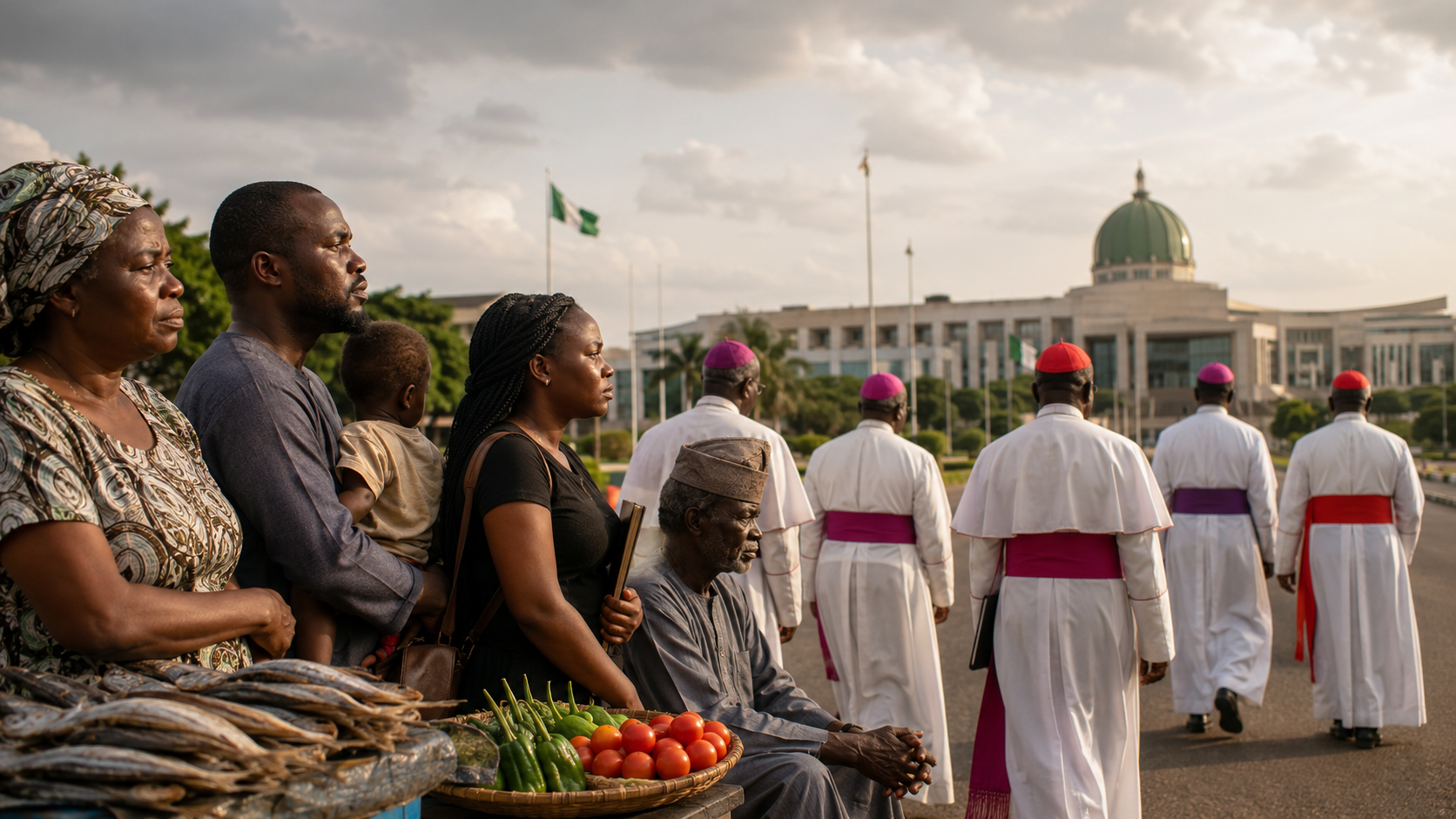
The bishops visited the State House in Abuja on 28 July 2026, not as political candidates or representatives of an opposition party, but as religious leaders conveying concerns gathered from communities across the country. Their message focused on poverty, insecurity, education, credible elections and the growing hardship confronting millions of Nigerians.
According to Cardinal John Onaiyekan, Archbishop Emeritus of Abuja and a member of the delegation, the bishops told the President that the economy was not adequately supporting poor Nigerians. President Tinubu, however, defended his administration’s performance and disagreed with their assessment.
The official State House account quoted the President as saying that Nigeria had been placed on a “sound footing”, the economy had recovered from the threat of bankruptcy and prosperity was on the horizon. He also insisted that life was improving. This optimism contrasts sharply with what many households report. Across Nigeria, families continue to struggle with high food prices, transport costs, unemployment, unreliable electricity and declining purchasing power. For citizens living through these pressures, positive economic indicators offer little comfort when their income can no longer cover essential needs.
The Presidency has every right to explain its policies and present evidence of economic progress. Stabilising public finances and restructuring a troubled economy are complex responsibilities. However, economic recovery cannot be judged only by government statistics, improved revenues or favourable projections. Its real test is whether ordinary people can afford food, housing, healthcare, education and transportation.
The meeting also addressed Nigeria’s democratic future. The bishops called for free, fair and credible elections in 2027, warning against the weakening of democratic institutions and the emergence of a dominant one-party system. President Tinubu defended the Independent National Electoral Commission, declaring that INEC was neutral and that political opportunities remained equal. Cardinal Onaiyekan later questioned whether an electoral body whose leading officials are appointed by the President can command sufficient public confidence without deeper institutional reforms.
That disagreement goes beyond political rivalry. Elections must not only be fair; citizens must be able to trust that they are fair. Public confidence cannot be established by declarations alone. It requires transparent appointments, accountable institutions, credible procedures and results that accurately reflect the choices made by voters.
Following Onaiyekan’s television interview about the meeting, the Presidency accused him of disclosing details of a private engagement and misrepresenting a legitimate disagreement over facts as presidential arrogance. The government maintained that Tinubu had listened patiently, acknowledged continuing challenges and presented evidence supporting his belief that Nigeria was recovering.
Nevertheless, the central question remains: how should leaders respond when respected institutions present an assessment that differs sharply from the government’s own position? The answer should not be hostility or dismissal. Democratic leadership requires the capacity to receive uncomfortable information. Religious leaders, civil society organisations, journalists, professional bodies and community representatives play an important role precisely because official reports may not always capture conditions at street level.
The biblical account of Rehoboam offers a relevant warning. When the people asked for relief from heavy burdens, he rejected the counsel of experienced elders and followed advisers who encouraged a harsher response. The result was the division of a kingdom that had taken generations to build.
Nigeria is not ancient Israel, and historical comparisons should not be used carelessly. Yet the enduring lesson is clear: leadership becomes vulnerable when loyalty is valued above truth and criticism is treated as opposition.
President Tinubu must guard against political praise-singers who create the impression that every reform is succeeding and every criticism is politically motivated. The greatest danger to a government is not always its opponents. Sometimes, it is the people closest to power who refuse to communicate the depth of public frustration.
The bishops have delivered their message. The Presidency has defended its record. What Nigerians now need is more than competing narratives. They need measurable relief, improved security, trustworthy elections and evidence that their voices influence national decisions.
Governments are strengthened, not weakened, when they listen. Public relations cannot reduce food prices, and political slogans cannot restore confidence in institutions. Nigeria’s leaders must close the widening distance between official optimism and lived reality. When citizens repeatedly say they are suffering, wise leadership does not merely explain why progress is coming. It listens, reassesses and acts.